
Our cats experience the world very differently than we do. Some feline senses are far keener than ours, while others are not as robust. Read on for a fascinating break down of what cats can see, hear, smell.
What Cats Can See, Hear & Smell
Satellite Dish Ears
A cat’s ear flaps, called pinnae, can rotate 180 degrees to pinpoint the location of a sound to within several inches in just six-hundredths of a second—faster than the blink of an eye—from up to three feet away, reports National Geographic.
Super Sniffers
Experts believe that a cat’s sense of smell is about 14 times better than ours. Cats have up to 200 million specialized cells that detect smells, compared with our mere five million. Kittens are born with a fully developed sense of smell, unlike the other four senses. Newborn kittens use their noses to find a nipple to nurse.
Ultrasonic Hearing
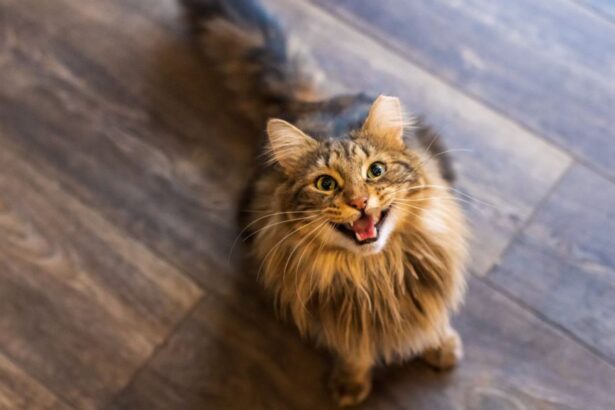
Cats have ultrasonic hearing that is far superior to humans and even dogs. They can distinguish between as little as one-tenth of a tone.

dzha33/Bigstock
Night Vision
Though they do need some light, cats see exceptionally well in the dark. Cat pupils are long and vertical. Their pupils narrow to a slit in broad daylight but expand up to 300 times when it’s darker. For comparison, human pupils grow only 15 times bigger in low light.
Cats perceive fewer hues than humans and their eyesight is blurrier.
Eyesight (Cats See Less Clearly Than Humans)
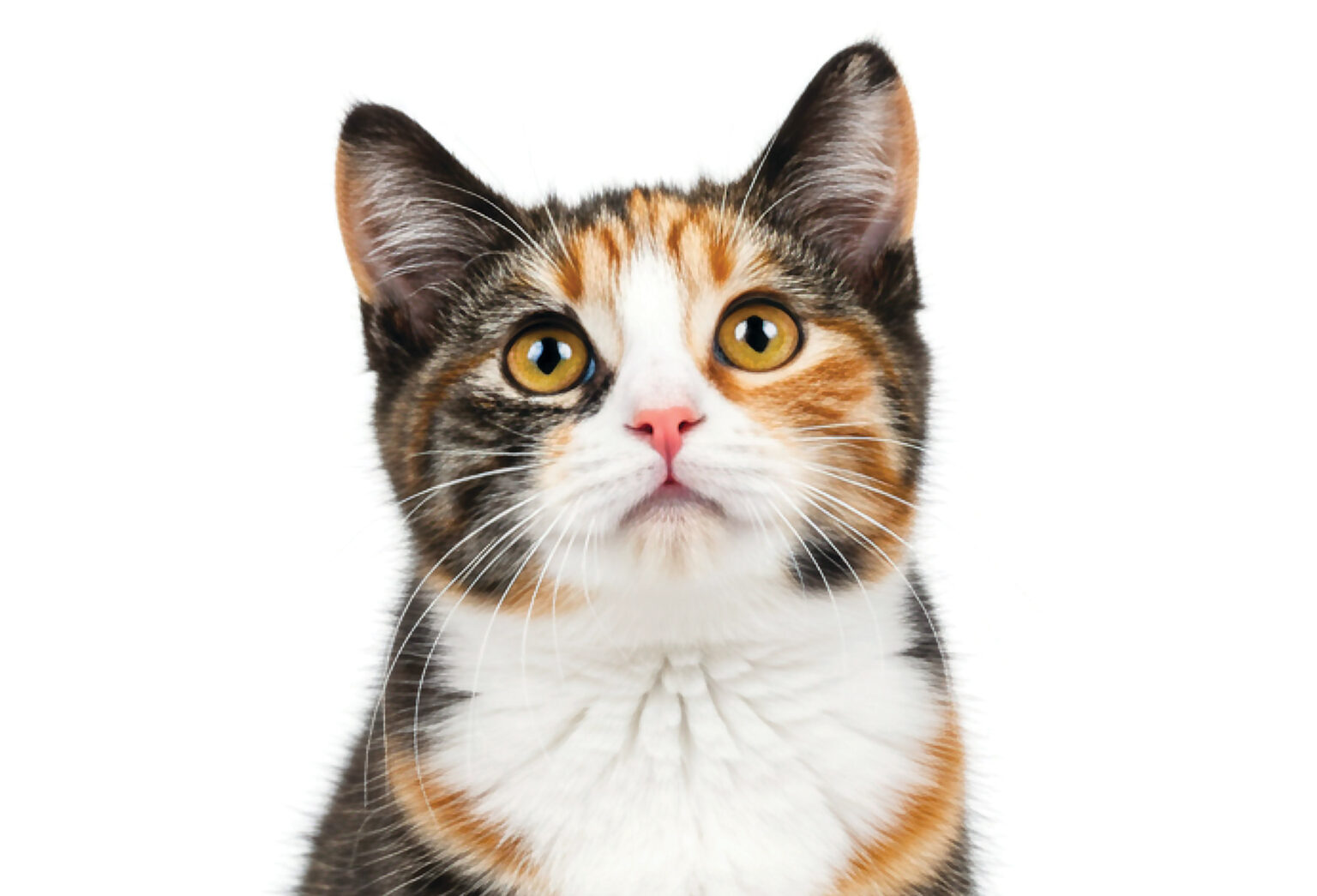
Cats’ retinas have fewer cones, the photoreceptors that perceive colour and are responsible for sharpness of vision. This means cats perceive fewer hues than humans and their eyesight is blurrier—what cats can see from 20 feet away, humans can see at 100 feet.

zossia/Shutterstock
The Colours Cats Can See
Cats primarily see blue and yellow, and they may perceive some shades of green. They are not able to see red or pink colours, which may appear as shades of grey or green to them. Their colour vision is similar to that of a person with red-green colour blindness.

- Limited Cone Cells: Cats have fewer cone cells in their eyes than humans (only two types, compared to our three), which limits their colour perception.
- Blue and Yellow: Cats can distinguish between blue and yellow colours.
- Shades of Green and Grey: They may perceive some shades of green and gray, as well as muted tones of blue and yellow.
- No Red and Pink: Red and pink colours appear as shades of grey or green.
- Rely on Movement and Contrast: Cats rely more on brightness, movement, and contrast to identify objects and navigate their environment.
Cats Can “Taste-Smell” the Air
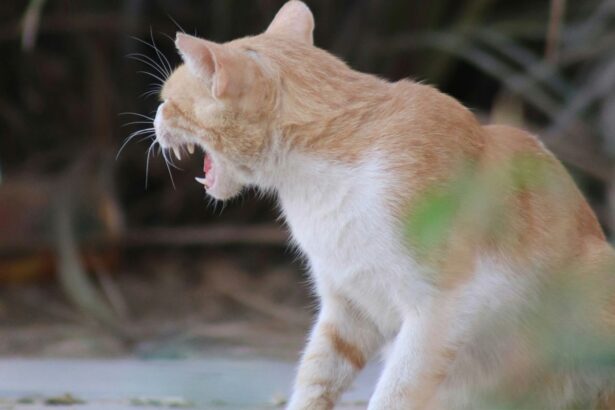
When cats grimace, they are usually “taste-scenting.” Cats have an extra organ that allows them to taste-smell the air. This unique way of experiencing taste utilizes a special organ called the Jacobson’s organ in conjunction with their sense of smell. This organ, located on the roof of the mouth, allows cats to “taste-smell” scents, especially pheromones and other chemical signals. This process, often accompanied by the flehmen response (a grimace-like facial expression where they wrinkle their nose and curl their lip), helps cats analyze these scents for information about their environment, including food and potential mates.
This ability to “taste-smell” is particularly important for cats in identifying pheromones, which play a vital role in communication, social interactions, and territorial marking. While cats do have taste buds, the Jacobson’s organ also helps them evaluate the palatability of food by analyzing its scent and flavour compounds.
This article originally appeared in the award-winning Modern Cat magazine.
Subscribe today!